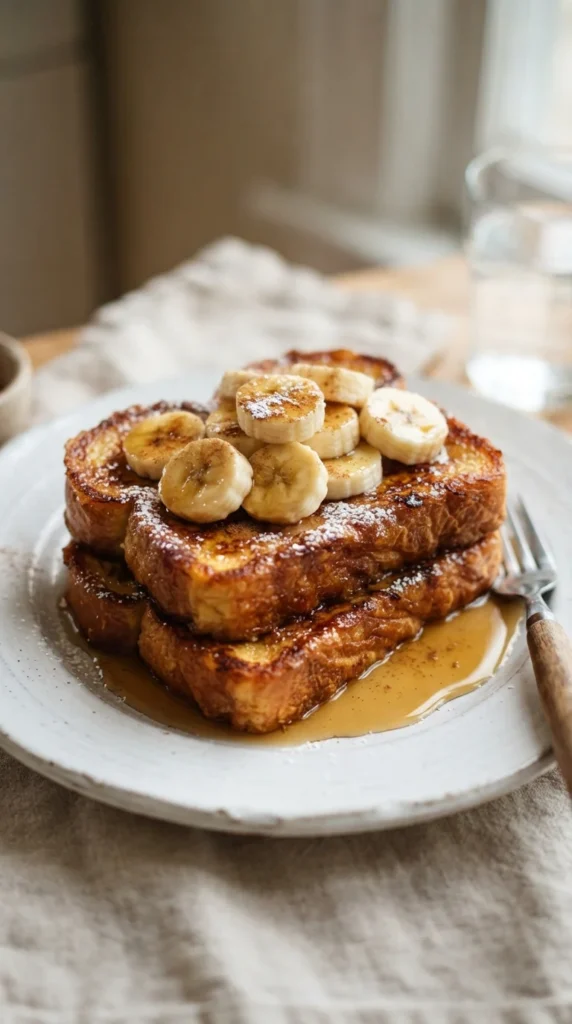
French Toast Recipe for Beginners with Simple Pantry Ingredients

Many homemade breakfasts turn out too dry, too soggy, or lacking flavor, especially for first-time cooks. This French Toast Recipe keeps everything simple by using basic pantry ingredients and easy steps anyone can follow confidently.
Common beginner problems include:
- Bread becomes soggy instead of crisp.
- Toast cooking unevenly or burning.
- Bland flavor from an unbalanced egg mixture.
Complicated recipes often require special ingredients or advanced cooking skills that can feel overwhelming. A few everyday kitchen staples and the right method help create soft, golden slices with delicious flavor every time.
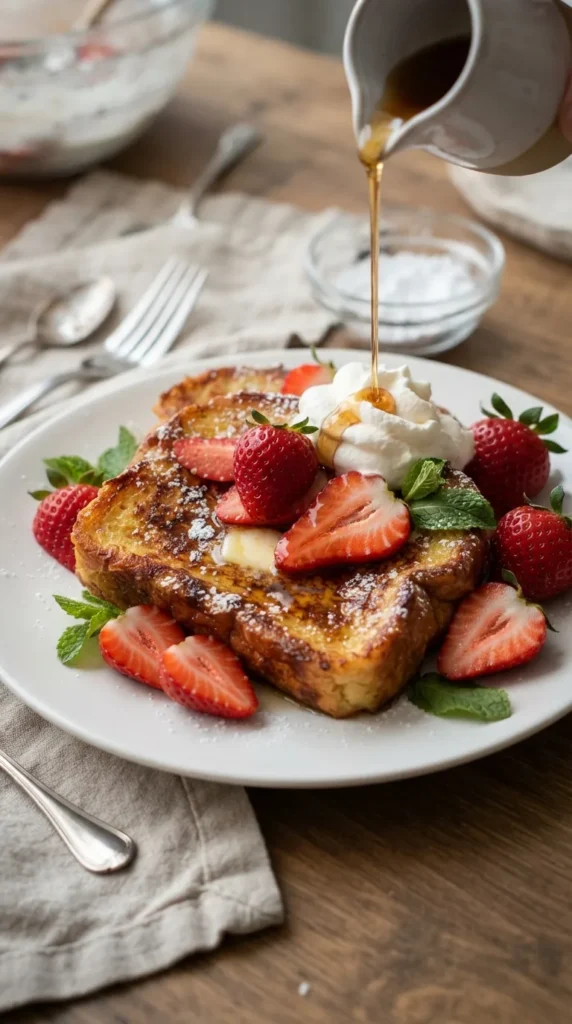
Busy mornings need meals that are quick, filling, and dependable without creating extra stress. This beginner-friendly recipe saves time, reduces mistakes, and makes it easy to prepare a warm breakfast the whole family will enjoy.
What Is French Toast?
French toast is bread soaked in a mixture of eggs and milk sometimes called a custard then pan fried until golden brown on both sides. The soaking step makes it different from a regular toast dish.
French toast is popular around the world under many names but the idea stays the same: stale bread egg mixture and a hot pan create a simple breakfast favorite enjoyed in many cultures worldwide.
Why This Beginner French Toast Recipe Works
This beginner French toast method is designed to be simple, reliable, and stress-free, making it perfect for anyone trying it for the first time. It focuses on everyday ingredients and an easy cooking process so you can get consistently good results without any complicated steps or equipment.
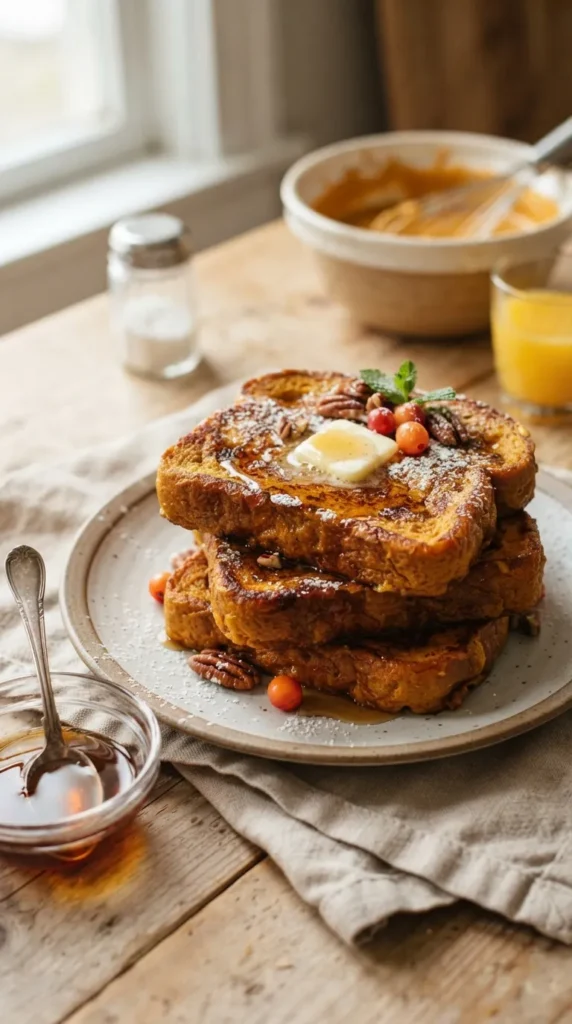
No Special Equipment or Fancy Ingredients Needed
You don’t need a griddle, a stand mixer, or specialty bread. A regular non-stick skillet and a shallow bowl are all the equipment this recipe requires. Every ingredient can be found in a typical pantry and fridge.
Foolproof Method Even First-Timers Can Follow
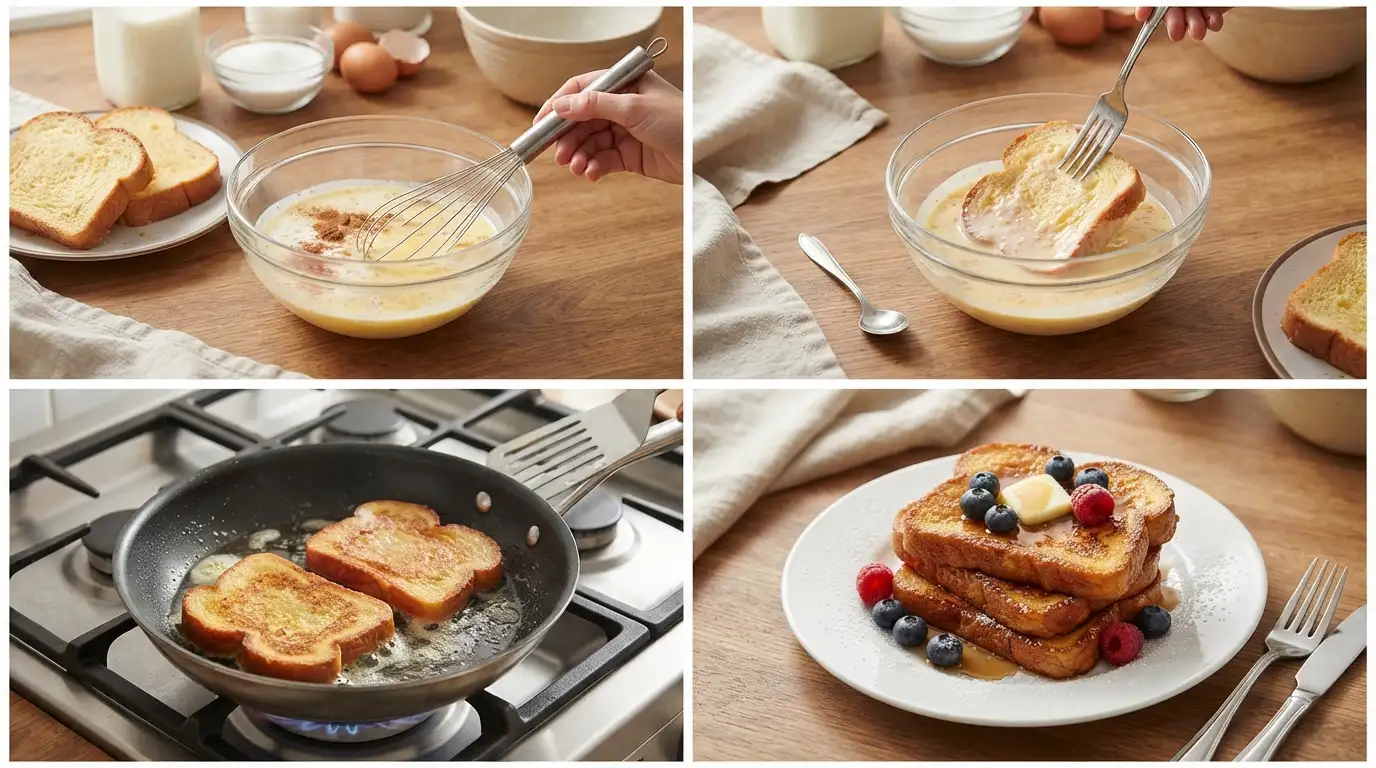
This recipe strips the process down to four simple steps. There’s no guesswork about timing, temperature, or technique, just a clear, repeatable method that works whether you’re cooking for one or feeding the whole family.
Pantry Ingredients You’ll Need
A great French toast starts with a few everyday pantry staples that work together to create the perfect balance of flavor and texture.
Eggs, Milk & Bread The Basics
These three ingredients form the foundation of any French toast recipe:
- Eggs: They give the custard structure and richness.
- Milk: Thins the custard so it soaks evenly into the bread. Whole milk gives the richest result, but any milk works.
- Bread: Thick slices work best. Slightly stale bread is ideal because it soaks up the custard without falling apart, but fresh bread works fine too.
Cinnamon, Vanilla & Sugar Optional but Recommended
These are not strictly necessary, but they make French toast more flavorful and aromatic:
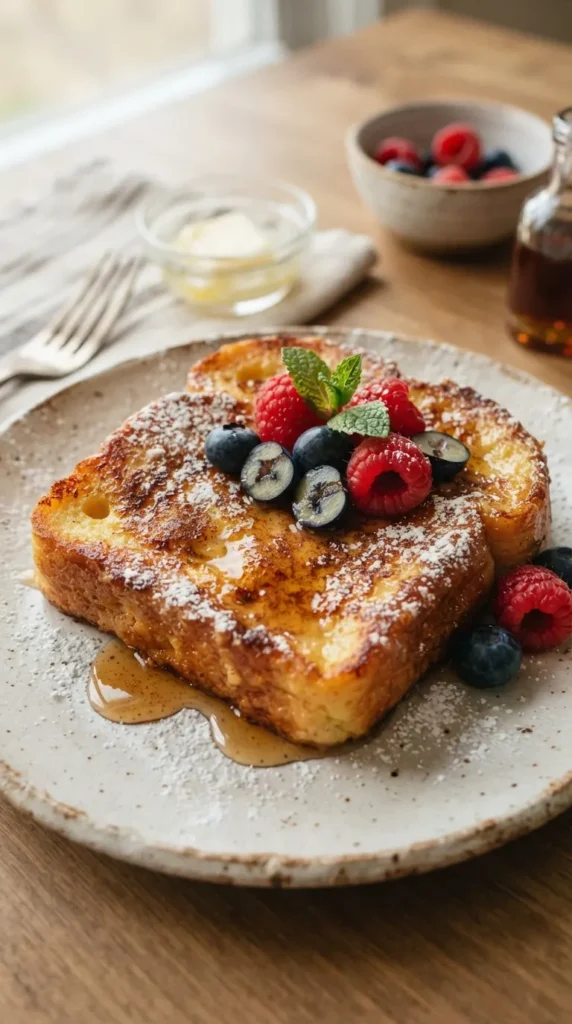
- Cinnamon adds warmth and a classic cozy flavor.
- Vanilla extract enhances sweetness and adds a deeper dessert-like aroma.
- Sugar helps the outside caramelize slightly during cooking, giving a golden-brown finish.
A pinch of salt is also useful as it balances sweetness and prevents the custard from tasting flat.
Ingredient Substitutes If You’re Missing Something
Beginners often worry about not having the “right” ingredients, but French toast is very flexible:
- No whole milk? Use any milk you have, including dairy or plant-based options like oat, almond, or soy.
- No vanilla? Skip it, or replace it with a small splash of maple syrup in the custard.
- No cinnamon? Use nutmeg instead, or simply leave it out since it is optional.
- Out of fresh bread, slightly stale or day-old bread is actually better because it absorbs custard more effectively.
Best Bread for French Toast And What to Do If You Don’t Have It
Thick, sturdy bread holds up best in the custard without getting soggy or falling apart. Brioche, challah, and Texas toast are popular choices because they’re soft yet dense enough to soak up the egg mixture.
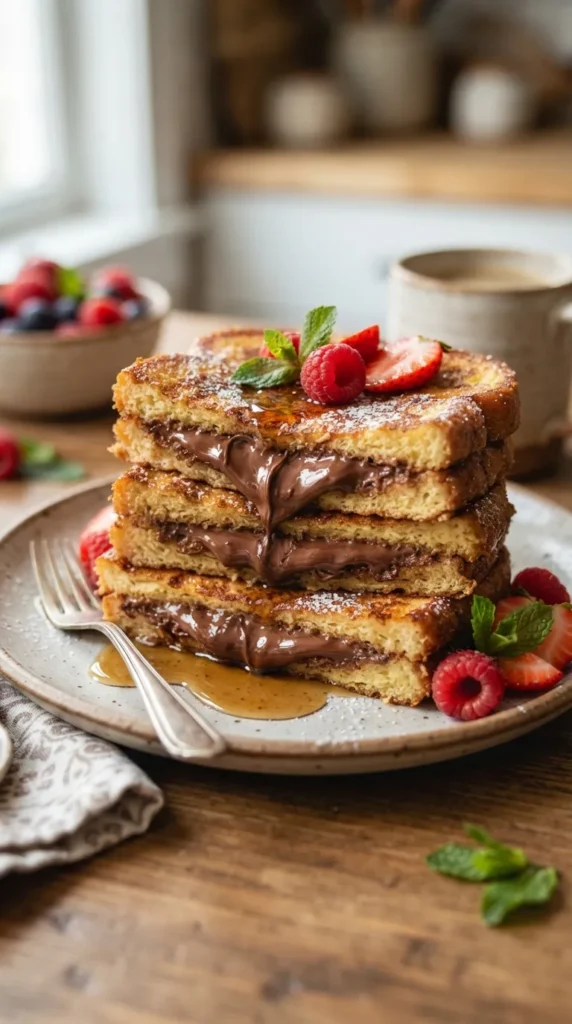
That said, you don’t need anything special. Regular sandwich bread works fine for a beginner batch, just handle it gently, since thinner bread soaks faster and can get delicate. Sourdough is another good option if you want a slightly tangy contrast to the sweet custard.
If your bread is fresh rather than stale, let the slices sit out for 30–60 minutes before you start, or lightly toast them first. This helps them absorb the custard without turning mushy.
What Is the Best Milk Ratio for French Toast Batter?
The best milk ratio for a classic French toast batter is about 1/4 cup of milk for every 2 large eggs. This balance creates a smooth custard that coats the bread evenly without making it too runny or too thick.
A simple guideline you can follow is:
- 2 eggs + 1/4 cup milk → standard 2–3 slices of French toast
- 4 eggs + 1/2 cup milk → larger batch for a family breakfast
Whole milk gives the richest flavor and softer texture, but any milk works, including almond, oat, or soy if you prefer a dairy-free version. If you like your French toast more custardy and soft, slightly increase the milk. If you want it firmer with crisp edges, reduce the milk a little and keep the mixture egg-forward.
How to Make French Toast Recipe Step by Step
French toast is a simple breakfast classic that comes together quickly with just a few basic steps.
Step 1: Make the Egg Custard
In a shallow bowl or dish, whisk together your eggs, milk, and any optional flavorings like cinnamon, vanilla, sugar, salt until fully combined and smooth. Whisking thoroughly prevents streaky bits of egg in your finished toast.
Step 2: Dip the Bread
Place one slice of bread into the custard, letting it sit for about 10–20 seconds per side. Thicker bread can soak a little longer; thinner slices need less time. You want the bread moistened all the way through, but not falling apart.
Step 3: Cook Until Golden Brown
Heat a lightly greased non-stick skillet or griddle over medium heat. Place the soaked bread in the pan and cook for about 2–3 minutes per side, until golden brown and cooked through in the center. Lower the heat if it’s browning too quickly before the inside is done.
Step 4: Serve Warm
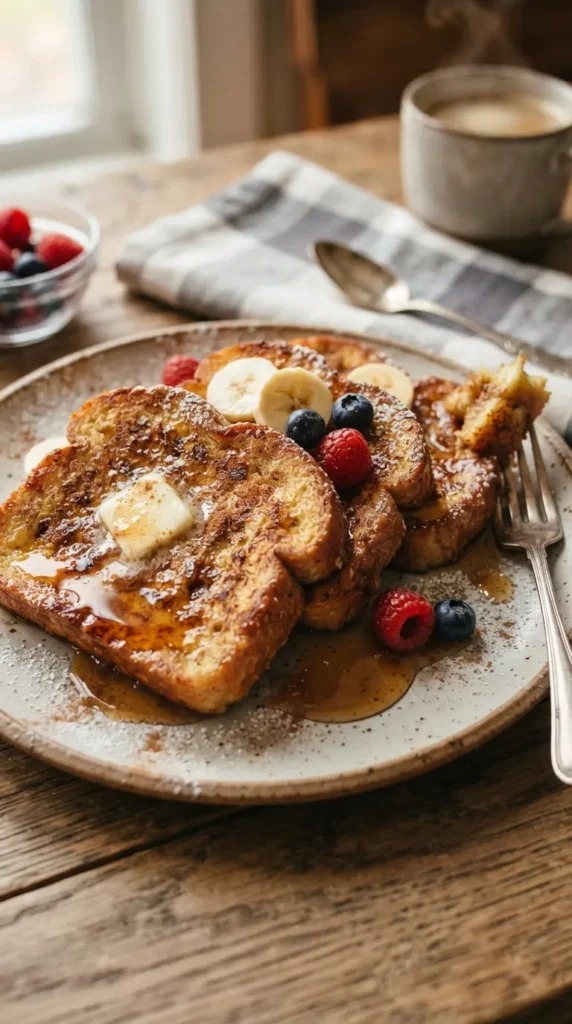
Transfer the cooked slices to a plate and serve immediately with your favorite toppings. If you’re making a large batch, keep finished slices warm in a 200°F oven while you cook the rest.
What Type of Pan Is Best for Cooking French Toast
The best pan for cooking French toast is a non-stick skillet or a well-seasoned cast-iron pan because both distribute heat evenly and prevent the bread from sticking or tearing during flipping.
- A non-stick skillet is the most beginner-friendly option since it requires less oil or butter and makes cleanup easier. It helps you get evenly golden slices without worrying about burning or sticking.
- A cast-iron pan is ideal if you want deeper browning and a crispier exterior. It holds heat very well, which gives French toast a rich, even color, but it needs proper preheating and light greasing to prevent sticking.
- Stainless steel pans can also work, but they require more attention and enough butter or oil to avoid sticking, making them less ideal for beginners.
Easy Variations to Try
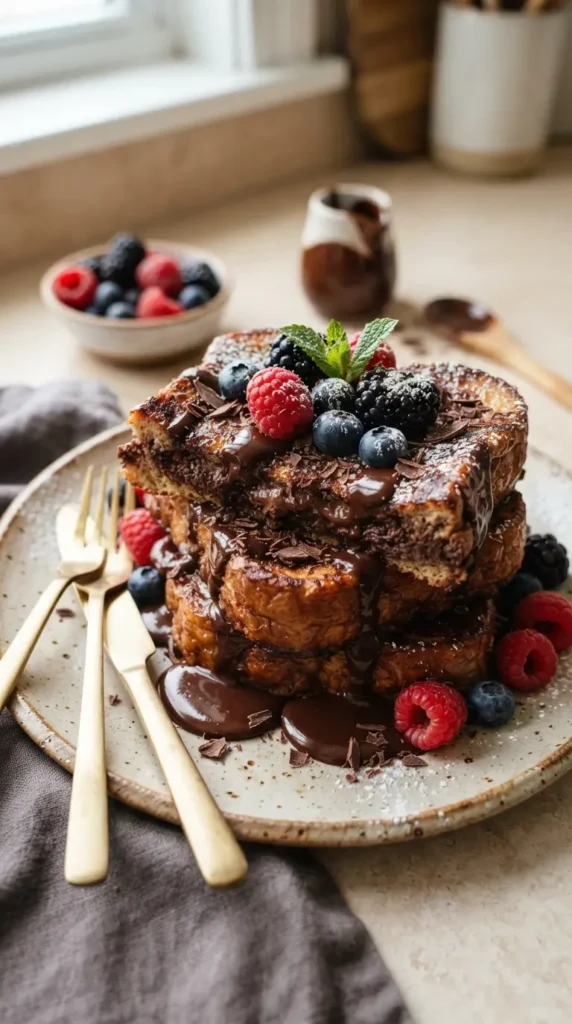
Once you’ve mastered the basics, small tweaks can change the flavor and texture completely. You can adjust ingredients, cooking fat, or toppings to match your taste and dietary needs.
Dairy-Free French Toast
Dairy-free versions are easy to make by swapping regular milk with plant-based alternatives. Almond, oat, or coconut milk all work well and still create a smooth, flavorful custard base.
Extra Crispy French Toast
For a crispier finish, combine butter with a little neutral oil while cooking. This helps prevent burning while giving the toast a deep golden crust with a satisfying crunch.
Sweet Toppings & Add-Ins
Toppings are where you can get creative and customize your French toast. Maple syrup, fresh fruit, whipped cream, and nut butters all add extra sweetness and texture to every bite.
How to Store and Reheat French Toast
Let leftover French toast cool completely before storing. Place it in an airtight container and refrigerate for up to three days, or freeze for up to three months to maintain freshness and prevent sogginess over time.
To reheat, use a skillet over medium heat, a toaster, or an oven set to 350°F for 8–10 minutes. Avoid the microwave because it softens the crust and reduces the crisp exterior texture significantly.
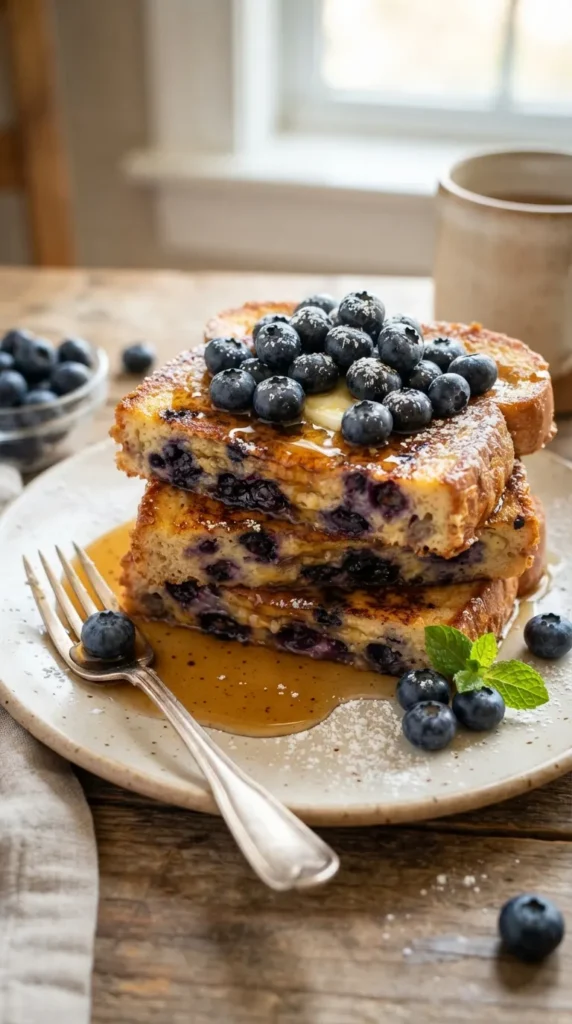
Beginner Tips for Perfect French Toast Every Time
Making a perfect French toast recipe is all about balancing texture, heat, and timing. With a few simple techniques, you can consistently get slices that are golden on the outside, soft on the inside, and never soggy.
- Soggy French toast usually happens when bread is soaked too long or is too soft to begin with. Use slightly stale bread and keep the dip brief so the custard coats the surface without making it overly wet.
- The right heat level makes a big difference in texture and color. Medium heat works best because it allows the inside to cook through while the outside turns evenly golden without burning.
- Soaking time controls how rich and custardy your French toast will be. Most bread only needs about 10–20 seconds per side so it absorbs flavor without becoming too heavy or falling apart.
Conclusion
With simple pantry ingredients and easy steps, this french toast recipe delivers golden, fluffy slices every time, bringing comforting flavor, quick preparation, and dependable results for any morning breakfast table.
Enjoy warm slices fresh from the pan with crisp edges and soft centers, perfect for family breakfasts, customizable toppings, and consistently satisfying results that make mornings more enjoyable and easy.
Frequently Asked Questions